Day-trip deep dive
Koprivshtitsa from Sofia
A small preserved village with a real transport catch, six house-museums, and the town where the April Uprising actually began.
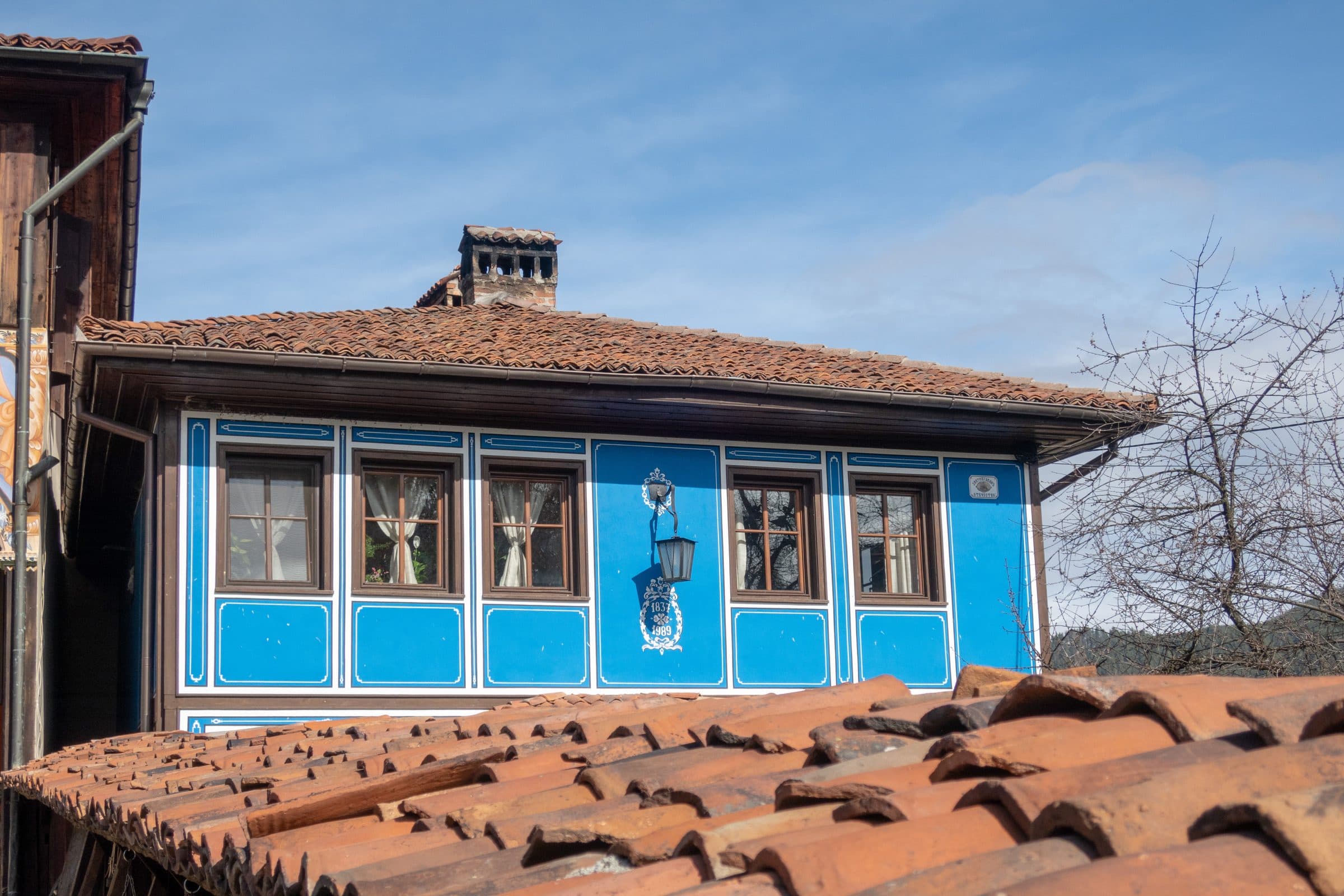
Vislupus (Nikola Bozhinov) / Wikimedia Commons, CC BY-SA 4.0
Koprivshtitsa shows up on the day-trips guide as a heritage-town candidate, but it isn't a smaller version of Plovdiv.
It's a small, preserved 19th-century village held at museum scale, and getting there takes more planning than Plovdiv's straightforward train line does.
Start with the transport reality, then use the house-museums, the town's role in the April Uprising, and what actually makes it different from Plovdiv to decide if it fits your trip.
- Transport reality
- More effort than Plovdiv
- Heritage core
- Six house-museums, one uprising
- Trip shape
- Half day, or paired with a stop
The train station sits outside town and needs a connecting shuttle; check current schedules before you commit.
The April Uprising against Ottoman rule broke out here first, on 20 April 1876.
A small preserved village, not a full urban day like Plovdiv.
Transport, answered first
More Effort Than Plovdiv, Less Than Rila Monastery
Koprivshtitsa sits roughly two hours from Sofia by road and is reachable by train on the Sofia-Burgas line, but the station doesn't sit in the town centre the way Plovdiv's does. Getting off the train is only half the journey.
Reported figures put the train journey at roughly 1 hour 50 minutes to 2 hours, with departures roughly every 4 hours, and the station itself about 7km outside town, requiring a connecting shuttle or taxi to close the gap. That's a real friction point Plovdiv's town-centre station simply doesn't have, so treat these figures as a starting point and check the current timetable before you travel.
Bus options are sparser still: reported service is limited to roughly one weekly long-distance departure, supplemented by a municipal bus running about three times a day. Driving is the fastest option, at roughly 1 hour 30 minutes each way.
Altogether, that makes Koprivshtitsa more effort than Plovdiv's realistic independent rail option, but genuinely more accessible than Rila Monastery, where no regular public bus reaches the monastery at all.
What's actually there
Six House-Museums, One Combined Ticket
Six house-museums make up Koprivshtitsa's heritage circuit, each preserving the home of a notable 19th-century figure: the Oslekov House, the Lyutova House, the Todor Kableshkov Museum, the Dimcho Debelyanov Museum, the Georgi Benkovski Museum, and the Lyuben Karavelov Museum.
The Koprivshtitsa Museums Directorate sells a combined ticket covering all six for EUR10 (EUR5 for students, seniors, and children), alongside a single-museum ticket, a family ticket, and a multilingual audio guide; entry is free on the last Monday of each month. Separately, guided hiking tours in the surrounding hills can be arranged in Bulgarian, English, and French through the Bogdan Tourist Center.
Museum hours run roughly 09:30-17:30 in season and shorter in winter, per the Museums Directorate's own site, but the six houses don't all close on the same day: some close Monday, others Tuesday. Confirm which houses are actually open on your visiting day before you build a fixed itinerary, since sources describe the exact split slightly differently.
History
Where the April Uprising Broke Out First
The April Uprising against Ottoman rule broke out first in Koprivshtitsa, and ahead of schedule. At a rebel planning meeting at Oborishte on 14 April 1876, a delegate disclosed the plot to Ottoman authorities, forcing the rebel committee to move up the uprising by roughly two weeks. Fighting began in Koprivshtitsa on 20 April 1876, making the town the place where the rebellion actually started rather than where it was originally planned to.
How it's different
A Small Preserved Village, Not a Smaller Plovdiv
Koprivshtitsa's character is genuinely different from Plovdiv's. Plovdiv is a working city with an ancient core and a modern contrast district in Kapana; Koprivshtitsa is a small, preserved 19th-century village held at museum scale, with no equivalent modern quarter layered on top.
That difference shapes the visit. Koprivshtitsa suits a shorter, half-day-focused stop or a pairing with another destination on the way, rather than the fuller urban day that Plovdiv's ancient-and-modern mix supports.
Confirmed Koprivshtitsa options
No confirmed options for this decision yet
This part of the guide is reserved for confirmed, bookable Koprivshtitsa options. None currently apply here.
See the day-trip guides for the confirmed options currently available for other destinations.
Where to go next
Where to Go for Format and Booking Decisions
For how Koprivshtitsa compares against Sofia's other day trips, see Sofia Day Trips. For how a small preserved village differs from Plovdiv's working-city day out, see Plovdiv from Sofia. For when to arrange transport for a trip like this one, see What to Book Before Visiting Sofia.
Before you travel
What's Worth Confirming Yourself
Train times, the station-shuttle connection, museum hours, and ticket prices are all worth confirming yourself before you rely on them.
This guide is built from research, not firsthand visits. Hello Sofia hasn't personally ridden the train, taken the station shuttle, or toured the house-museums, so treat it as a starting point rather than a review.
Staying accurate
How We Keep This Koprivshtitsa Guide Accurate
The train schedule and station-shuttle connection, plus museum hours and ticket prices, all come from sources that could shift or go stale, so we've flagged them as facts to recheck regularly rather than leave to go stale.
Return to Sofia Day Trips to compare destinations, or start from First Time in Sofia.